
Just a Square Meter
Abundance doesn't require a lot of acreage. Plus, cherry salsa.

Market gardeners often struggle with calling their work farming. I grew up on a farm, with animals, fields of grain, pastures, a barn, large chicken coop, and pig sty, plus a milk house and a warehouse for two tractors and all the implements, so when I started my first market garden on half an acre I refrained from calling it a farm.
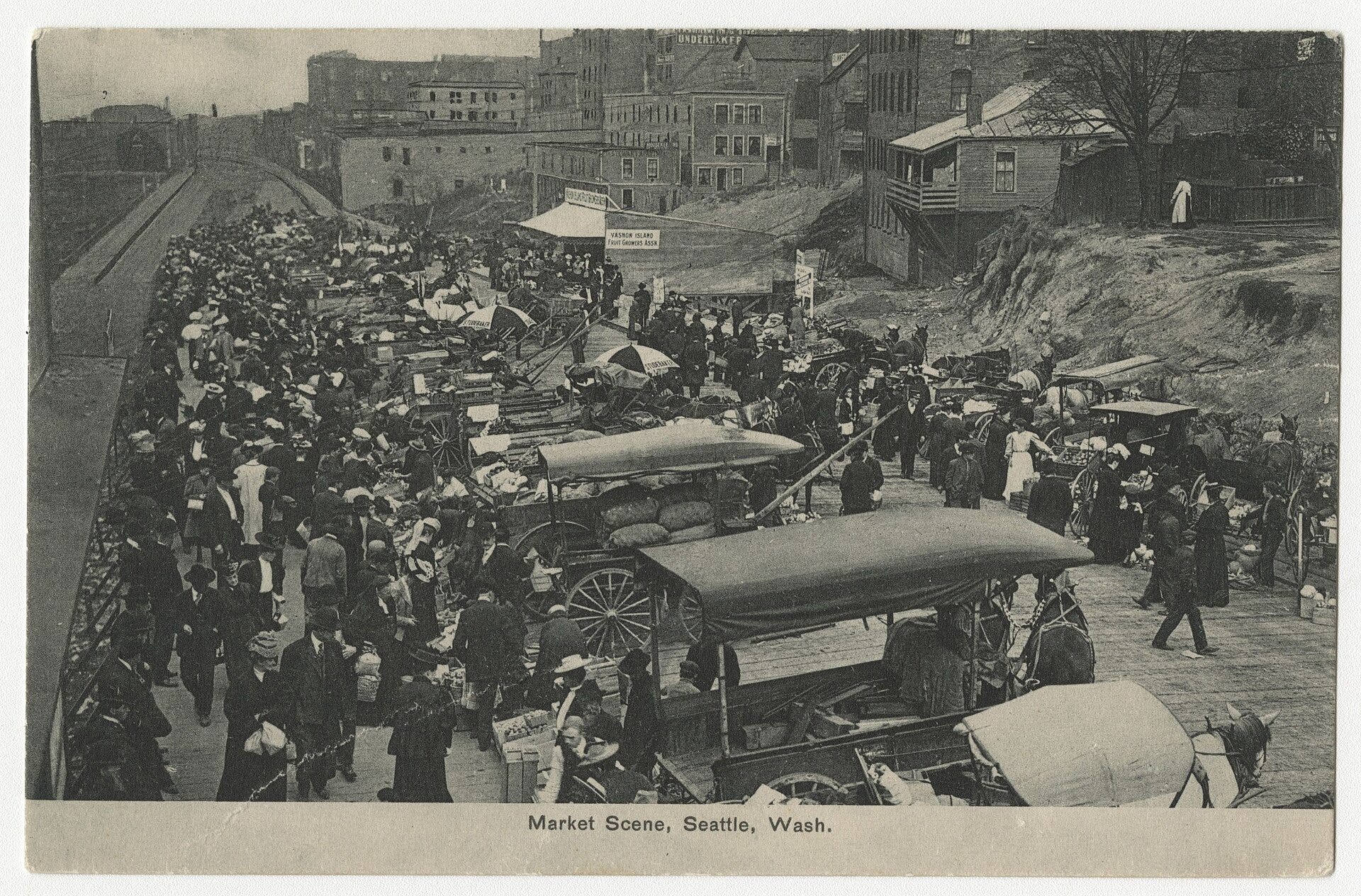
Is a vegetable grower a farmer? Back in the old days, market gardens or truck farms produced field grown veg for markets. Interestingly, the word “truck” didn’t originate with the vehicle.
A truck farm is a small agricultural enterprise devoted to raising vegetables, fruit, dairy and other delicate edibles. “Truck” comes not from the vehicle they were transported in — yet to be invented in the late 1800s — but from the French torquer, meaning exchange or barter, as many such farmers traded their yield at the town market.
The quote is from Nola Historic Tours website, which has a recommended article about the truck farms of the 1900s. These vegetable growers had smaller plots on the perimeter of urban areas where ground was fertile and transportation needs modest so they could get fresh food (from veg to milk and eggs) as quickly as possible.
I thought about these farmers and today’s market gardeners this week when Adam Cohen’s note popped up on Substack:
Not only do people in general think of acreage, but also governments. In North America and Europe, small farms are not subsidized by public money because they’re too small to be considered “real” farms. It doesn’t matter how productive they are per square meter, nor how many families benefit from their growing. The smaller the farm, the more independent it must be, which means it is highly dependent on local customers.
This brings me to my main topic this week, the wonderful abundance of a square meter. As regular readers know, I’m a strong proponent of in-ground garden beds wherever the soil is good. This square meter at the end of the cold frame used to be grass and wild flowers until this year. In early spring I covered it with cardboard and set trays of transplants on it. By mid-May it was ready for sowing.
The soil is clay and sand, so I added a bit of compost, but not much. Pole beans were the plan and they don’t require nutrient-rich soil. I stuck in several long branches and sowed 4-5 seeds (a regional scarlet runner bean variety called “Käferbohne” with especially large beans) at each pole.
There was still plenty of room behind the tipi along the walkway between the garden and the house, so I stuck a small piece of metal grid in and planted 5 cucumbers (‘Dekan’, a variety from Crimea). Then, this past week a friend gave me some ‘Liefje’ pickling cucumbers, early maturing and robust, so I stuck those in front of the beans where they can sprawl a bit.
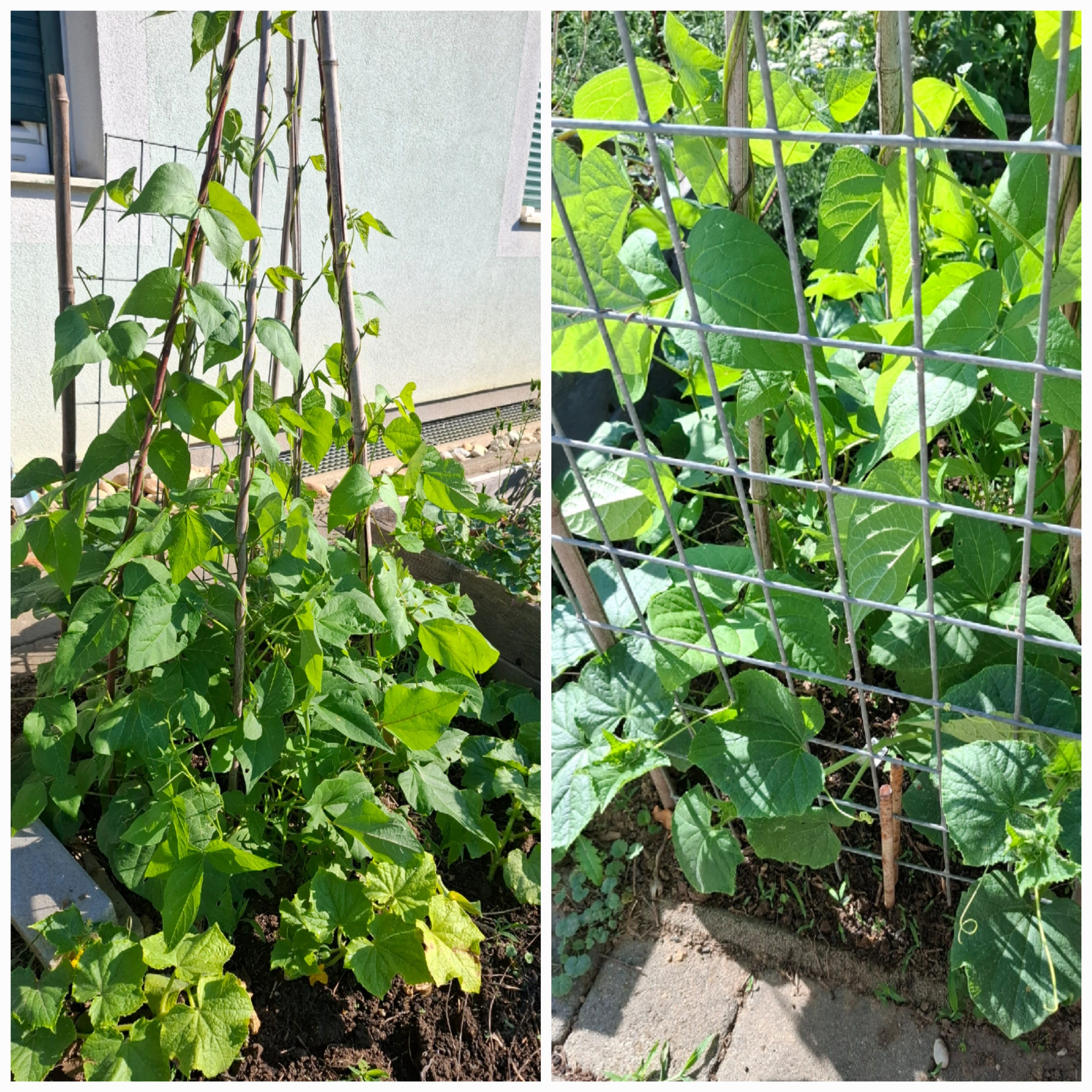
How much will I harvest from this square meter? If I’m lucky, a pound of beans (by far not enough for our household) and enough cucumbers for fresh eating through to August.
Square meter (about 10.5 square feet) is my planning and planting standard. It was also the basis for planning the demonstration garden. As you can see from this picture in July 2022, the garden’s first year, Most everything is planted by square meter with the exception of cooking onions, which I planted along the edges of the beds (1x6m, roughly 3x18 ft.). The tomatoes are growing in the cold frame, which was sized to fit the windows for it (1x4.5 m). To the right you can see two zucchini plants taking up a full square meter, to the left of that bed, two artichokes doing the same. Also easy to make out are the square meters of carrots and leeks.
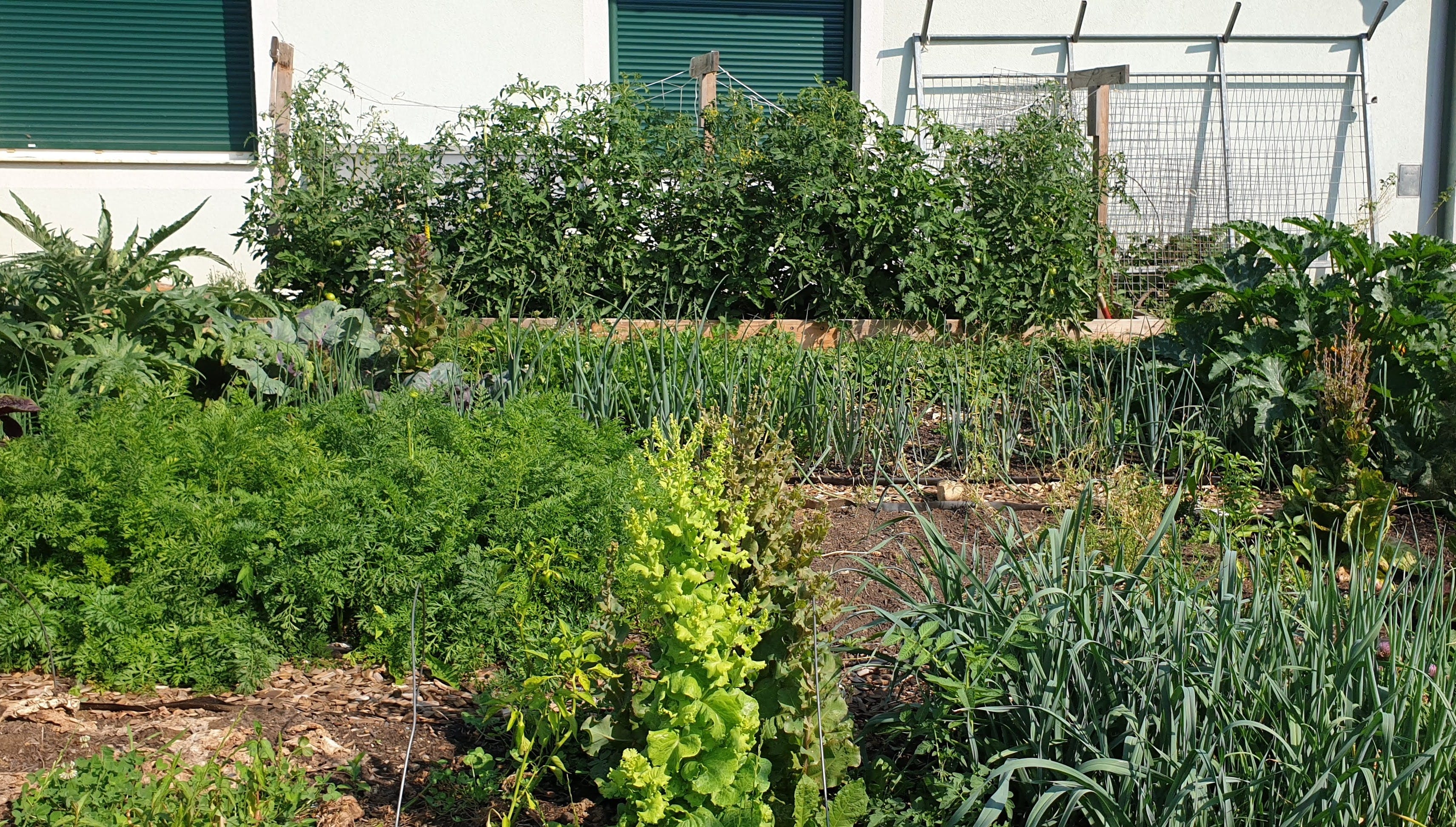
Growing in blocks like this (as opposed to row culture) reduces exposed surface of soil and results in higher yield. I can easily access the beds from both sides, so long reaches are not necessary.
The flavors of June
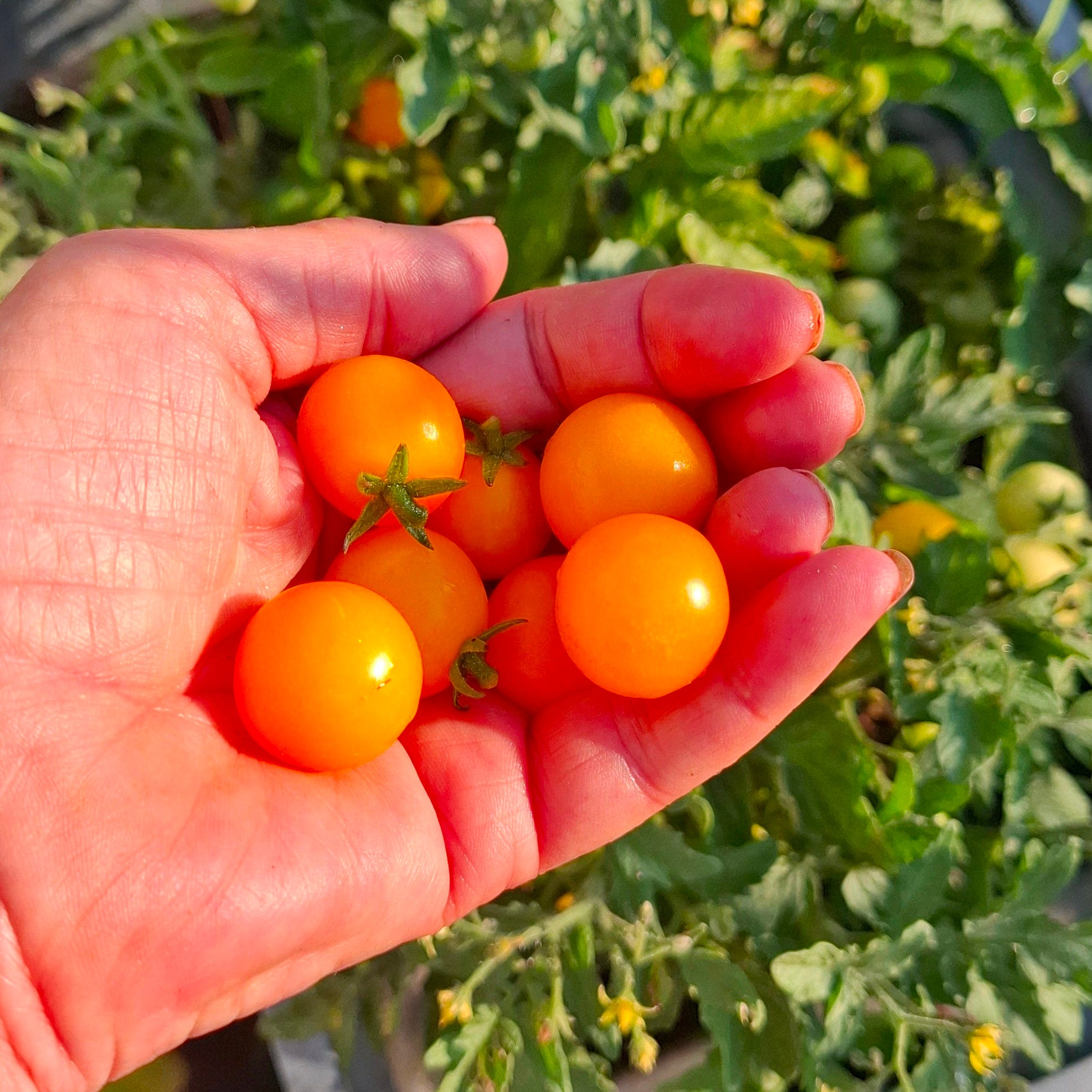
Just in time for Summer Solstice, the first cherry tomatoes were ripe for picking this morning. These are from the dwarf tomato ‘Aztek’ in planters on our terrace.
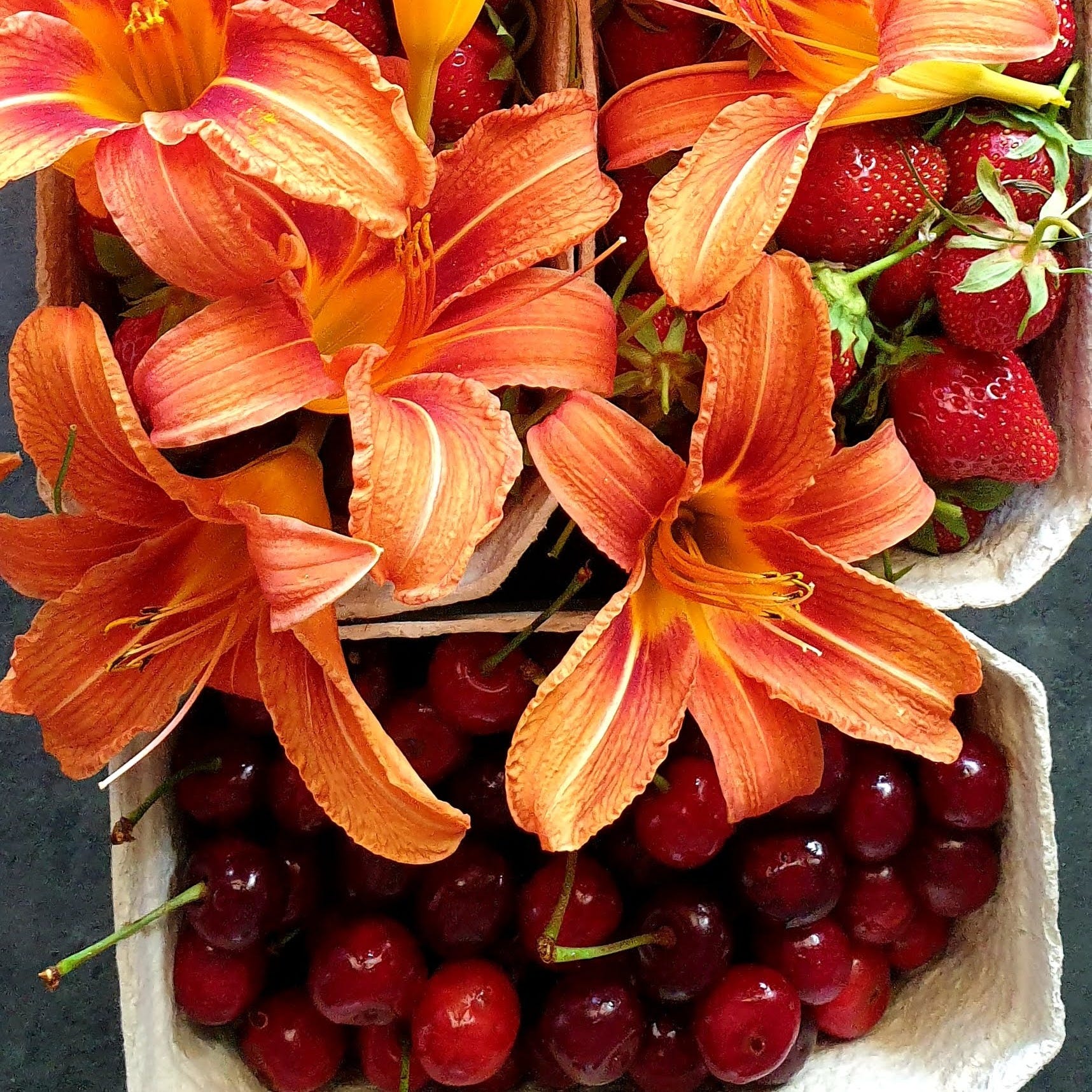
Late June is the time for daylilies, which are delicious. The buds are excellent pickled the flowers are delicious stuffed with a creamy herby filling or just chopped in salads. It’s also still strawberry season here and, as mentioned last week, there are bumper crops of cherries in our region. My sister-in-law, who recently moved to the area, invited me to come pick as many cherries as we want. They have a beautiful sweet cherry tree (similar to bing cherries), so I went to pick a couple of buckets and then spent two days pitting and processing them. I’ll be taking a quart jar of cherry salsa with me today to our garden outing and picnic at Andrea Bregar’s herb garden.
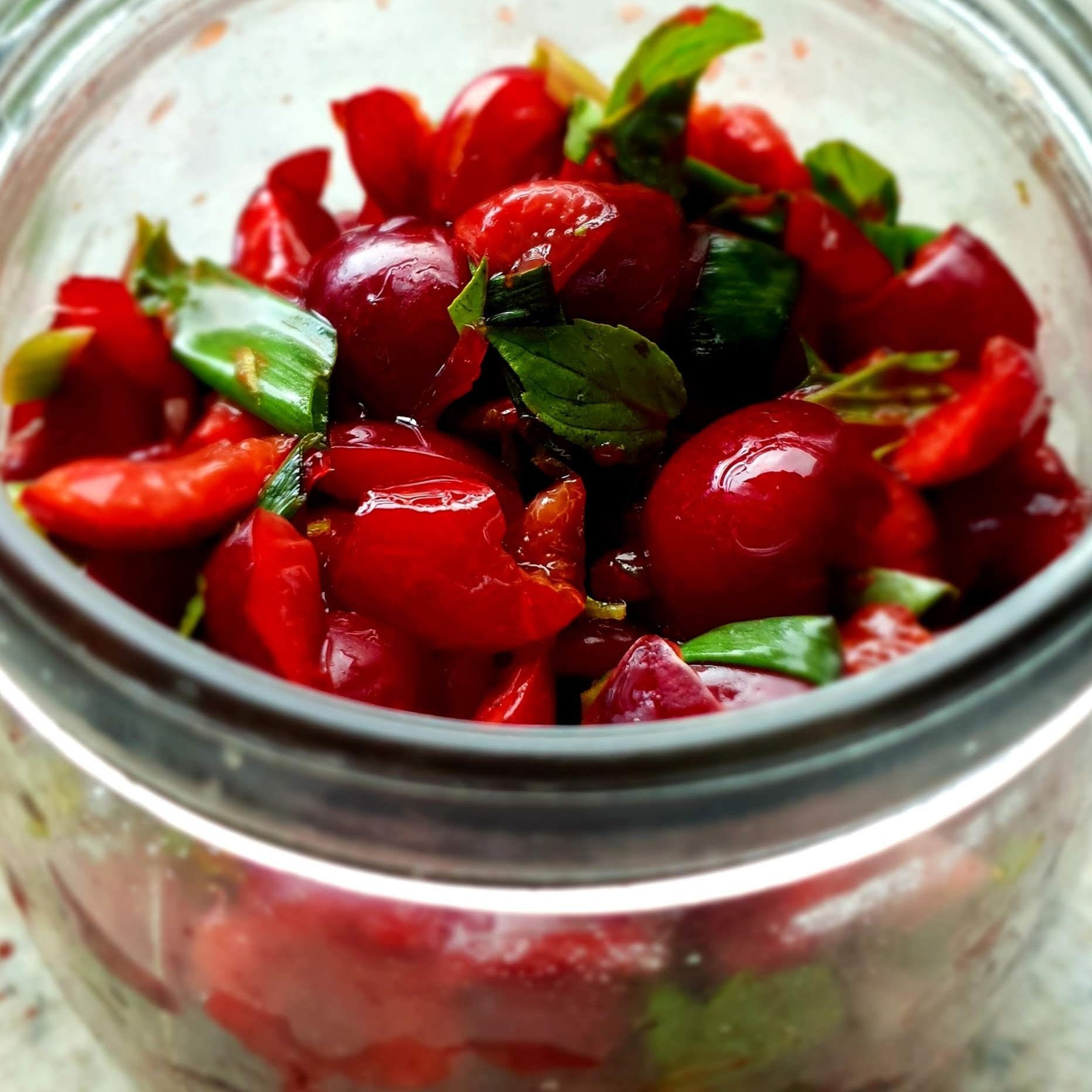
I have no idea where I got the recipe, so I apologize to the genius cook who came up with it. Depending on the cherries you use, sweet or sour, and the type of basil (I used lemon this time) the character of the salsa will vary.
1 lb. / 1/2 kg chopped cherries
2 tablespoons lemon juice
2 teaspoons honey
1 small to medium sized red onions, chopped
1 tablespoon balsamico
handful of basil, chopped
dash of salt
Mix and allow the flavors to mingle for at least an hour before serving. I can keep this in a jar in the fridge for several days.
Coming up this week
We’re in the midst of a heat wave, so I air in the morning and close the shutters before the day heats up. My whole focus is on keeping the house cool. Since my heart sustained a bit of damage from trying to pump despite a saddle pulmonary embolism, the heat and I are not very good friends.
I managed to use the cooler days early in the week to finish prepare and plant the uncovered tunnel with the last tomatoes and peppers. Some of the seeds are still ripening, so two beds are still a jungle.
The fall greens - all the brassicas and radicchio - have sprouted nicely, so now it’s just a matter of tending to them.
I’ll be sowing the last round of cucumbers tonight.
Meanwhile, beds are emptying where lettuce and the nearly finished snap peas were growing, so I’ll be using an early morning or two to sow root crops for fall harvest:
carrots (‘Kuroda’ and ‘Oxheart’)
rutabaga
beets
I’m off now to one of our regions most magical gardens, with the garden brunch round. We’re taking along a picnic to enjoy after the garden tour.
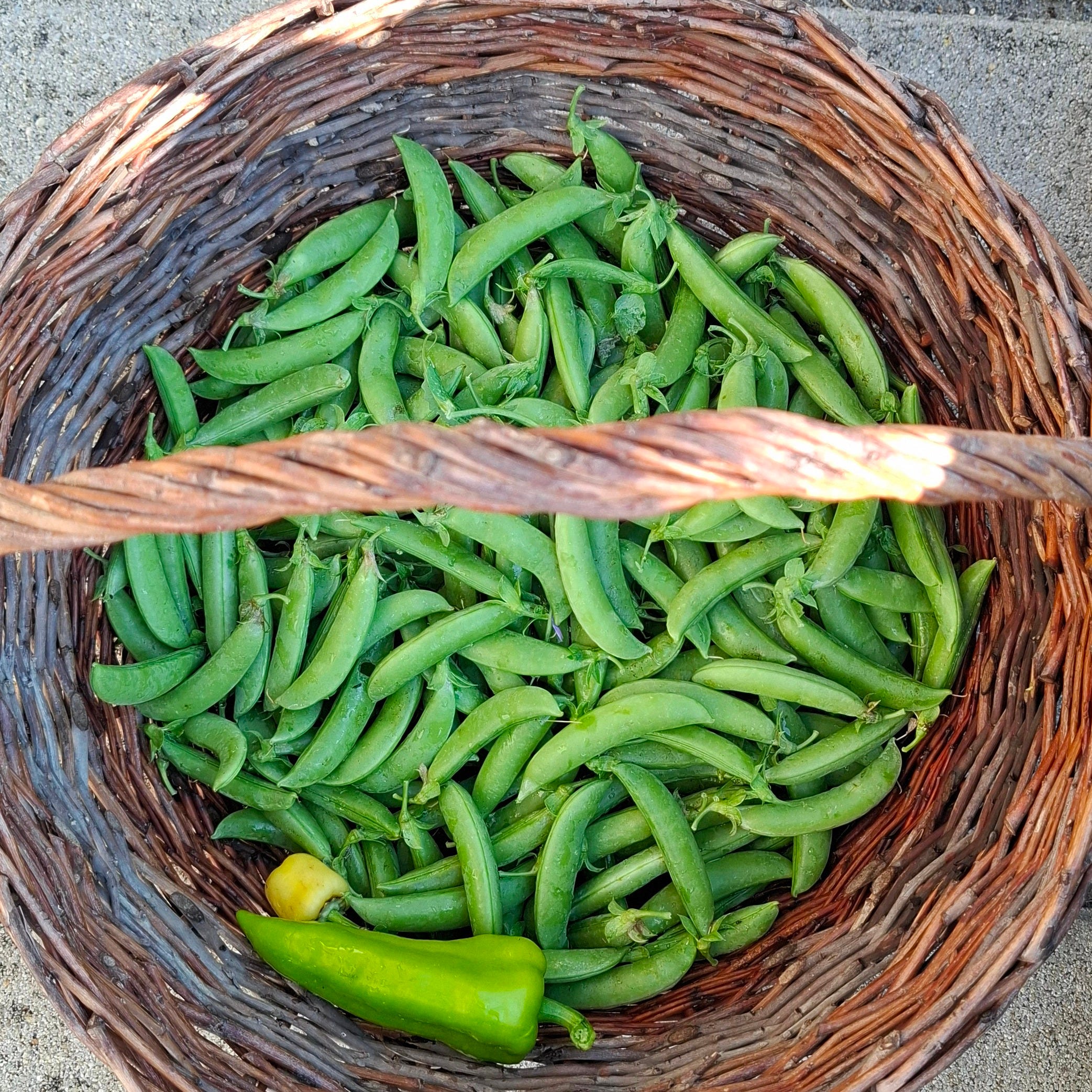
I’ll close with the basket of snap peas and a random pepper I picked this week (chopped, blanched, and in the freezer).
Best wishes from here to there,
Tanja
Incredibly productive and beautiful! My garden, similarly intensively planted is coming along, we are about a month behind you and today is the summer solstice, so with peak light levels everything has burst into fruit and flower!
Wie schön dein Garten geworden ist! Hier (Tirol) ist es unglaublich heiß, über 30 ° C, in der Nacht nur knapp unter 20 °C. Ich vertrage die Hitze überhaupt nicht und mache es wie du: in der Nacht durchführen, dann die Fensterläden zu und nicht zuviel im Freien unternehmen.
Hier gibt es auch eine reiche Kirschenernte, daher Danke für dad tolle Rezept! Bin schon beim machen 🥰
Die Taglilien blühen noch, die kommen bei mir in den Salat- köstlich und wunderschön
In unserem Gemeinschaftsgarten habe ich Walderdbeeren und Himbeeren gepflanzt, meine Enkelinnen lieben es, dort zu ernten.
Garten ist Erholung, Freude und Balsam für Herz und Seele, vor allem in Zeiten wie diesen